Speaker
Description
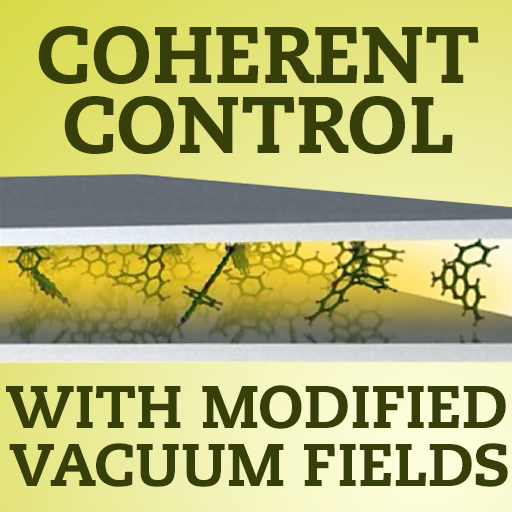
Frame Molecular cavity quantum electrodynamics examines how confined radiation modes – in a Fabry-Perot or plasmonic nano-cavity – interact with molecules. The coupling between photons and molecules gives rise to mixed light–matter hybrid states, known as polaritons, which exhibit both photonic and molecular characteristics. The use of cavities to impact molecular structure and dynamics has become popular.
Frame As cavities, in particular plasmonic nanocavities, are lossy and the lifetime of their modes can be very short, their lossy nature must be incorporated into the calculations. The non-Hermitian Schrödinger and Lindblad master equations are commonly considered as appropriate tools to describe this lossy nature [1].
Frame The present talk reviews our recent achievements in this area: i) We demonstrate how the interplay of the atomic, molecular, and photonic populations gives rise to rich dynamics in the cavity [2]; ii) We discuss the light-induced nonadiabatic dissociation dynamics of a single molecule interacting with a lossy plasmonic nanocavity under strong coupling conditions [3,4]; iii) We also investigate the role of nuclear spin statistics and the Pauli principle in polaritonic chemistry. We assume vibrational strong coupling and study effects associated with the exchange of identical particles for one and two molecules coupled to a cavity mode. Our results highlight striking quantum-dynamical consequences of the Pauli principle [5].
[1] Fábri C., Császár A., Halász G. J., Cederbaum L. S., and Vibók Á. JCP. 160, 214308, (2024).
[2] Csehi A., Szabó K., Vibók Á., Cederbaum L. S., and Halász G. J. PRL. 134, 188001, (2025).
[3] Fábri C., Csehi A., Halász G. J., Cederbaum L. S., and Vibók Á.
AVS Quantum Science. 6, 023501, (2024).
[4] Szabó K., Fábri C., Halász G. J., and Vibók Á. JPCC. 129, 5950, (2025).
[5] Fábri C., Halász G. J., Cederbaum L. S., and Vibók Á. To be published.