Speaker
Description
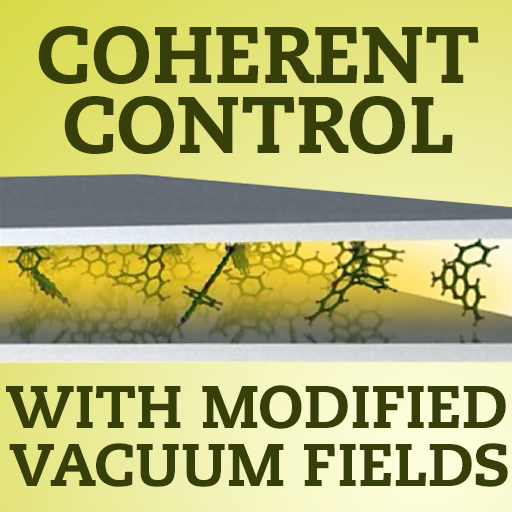
Recent experiments have shown that vibrational strong coupling (VSC), a cavity quantum electrodynamics phenomenon, can alter chemical reactivity by changing kinetics, mechanisms, and product distributions.[1-4] VSC arises from the formation of hybrid light–matter states when molecular vibrations couple to photonic cavity modes, enabling modification of molecular wavefunctions without external illumination. While this possibility of controlling reactivity has generated major excitement, no predictive theoretical framework exists. Despite growing experimental evidence, it remains unclear when and how VSC affects reactions, posing a key fundamental challenge and limiting potential applications. Our work aims to model VSC with atomistic details using a classical molecular dynamics (MD) approach. Since vibrational degrees of freedom are not quantized in classical mechanics, we propose to overcome that limitation by combining classical molecular mechanics (MM) or semi-classical quantum mechanics/molecular mechanics (QM/MM) potentials with a biasing potential, effectively imposing quantization on the relevant vibrational transitions in MD simulations. I will present benchmark results demonstrating the introduction of vibrational quantization in classical MD simulations in the absence of a cavity. These results show that the
biasing potential can successfully reproduce quantized vibrational behavior within a classical framework. This methodology provides a foundation for extending the approach to systems inside optical cavities, enabling the study of chemical reactivity under VSC conditions.
References
- Garcia-Vidal, F. J., Ciuti, C. & Ebbesen, T. W. Science 373, eabd0336 (2021).
- Thomas, A. et al. Science 363, 615–619 (2019).
- Xiang, B. et al. Science 368, 665–667 (2020).
- Pang, Y. et al. Angew. Chem. Int. Ed. 59, 10436–10440 (2020)